

EAST ASIA SHIPPING UPDATE
Οκτώβριος 7, 2026
EAST ASIA SHIPPING UPDATE
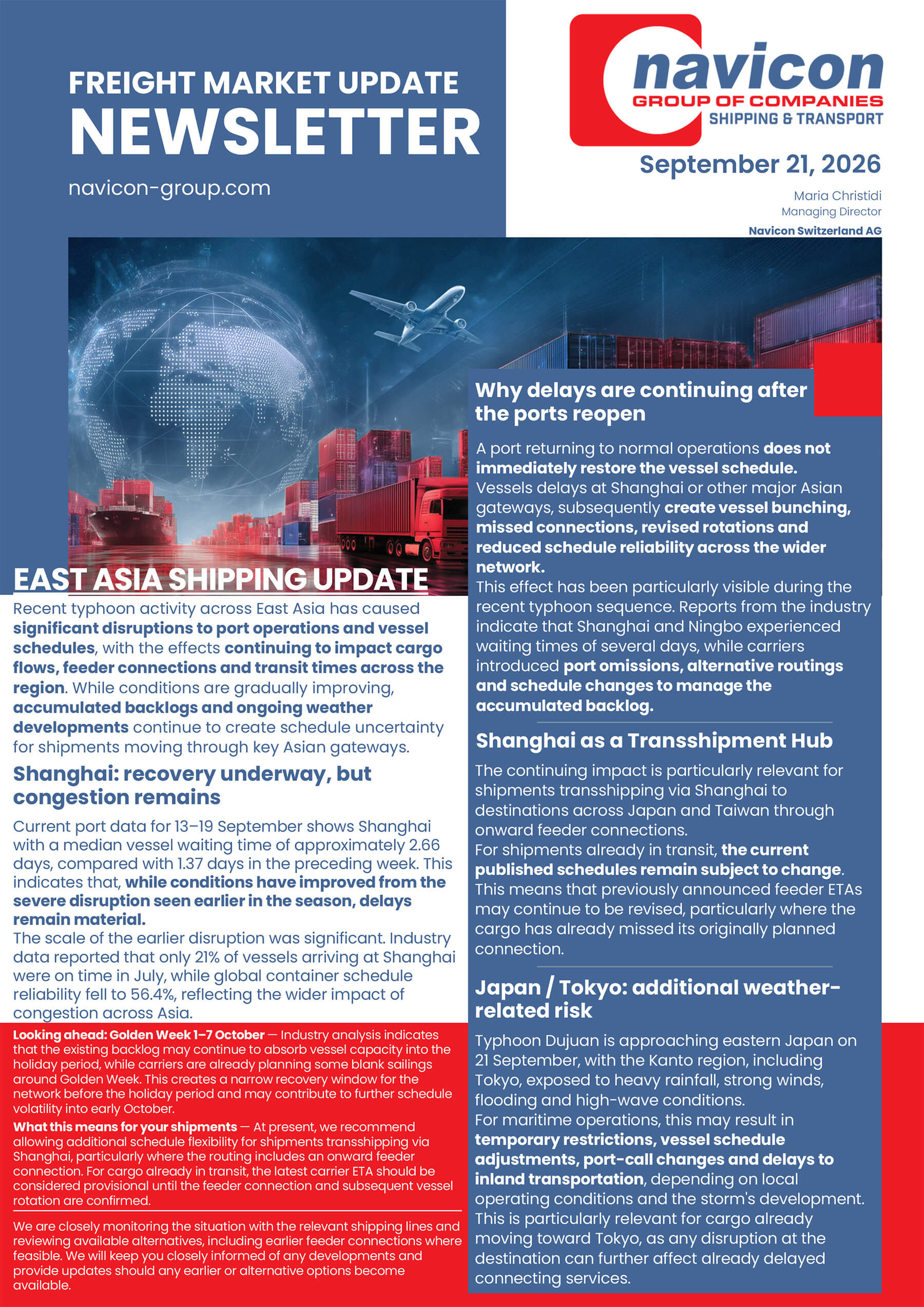
Recent typhoon activity across East Asia has caused significant disruptions to port operations and vessel schedules, with the effects continuing to impact cargo flows, feeder connections and transit times across the region. While conditions are gradually improving, accumulated backlogs and ongoing weather developments continue to create schedule uncertainty for shipments moving through key Asian gateways.
Shanghai: recovery underway, but congestion remains
Current port data for 13–19 September shows Shanghai with a median vessel waiting time of approximately 2.66 days, compared with 1.37 days in the preceding week. This indicates that, while conditions have improved from the severe disruption seen earlier in the season, delays remain material.
The scale of the earlier disruption was significant. Industry data reported that only 21% of vessels arriving at Shanghai were on time in July, while global container schedule reliability fell to 56.4%, reflecting the wider impact of congestion across Asia.
Why delays are continuing after the ports reopen
A port returning to normal operations does not immediately restore the vessel schedule.
Vessels delays at Shanghai or other major Asian gateways, subsequently create vessel bunching, missed connections, revised rotations and reduced schedule reliability across the wider network.
This effect has been particularly visible during the recent typhoon sequence. Reports from the industry indicate that Shanghai and Ningbo experienced waiting times of several days, while carriers introduced port omissions, alternative routings and schedule changes to manage the accumulated backlog.
Shanghai as a Transshipment Hub
The continuing impact is particularly relevant for shipments transshipping via Shanghai to destinations across Japan and Taiwan through onward feeder connections.
For shipments already in transit, the current published schedules remain subject to change. This means that previously announced feeder ETAs may continue to be revised, particularly where the cargo has already missed its originally planned connection.
Japan / Tokyo: additional weather-related risk
Typhoon Dujuan is approaching eastern Japan on 21 September, with the Kanto region, including Tokyo, exposed to heavy rainfall, strong winds, flooding and high-wave conditions.
For maritime operations, this may result in temporary restrictions, vessel schedule adjustments, port-call changes and delays to inland transportation, depending on local operating conditions and the storm’s development.
This is particularly relevant for cargo already moving toward Tokyo, as any disruption at the destination can further affect already delayed connecting services.
Looking ahead: Golden Week 1–7 October — Industry analysis indicates that the existing backlog may continue to absorb vessel capacity into the holiday period, while carriers are already planning some blank sailings around Golden Week. This creates a narrow recovery window for the network before the holiday period and may contribute to further schedule volatility into early October.
What this means for your shipments — At present, we recommend allowing additional schedule flexibility for shipments transshipping via Shanghai, particularly where the routing includes an onward feeder connection. For cargo already in transit, the latest carrier ETA should be considered provisional until the feeder connection and subsequent vessel rotation are confirmed.
We are closely monitoring the situation with the relevant shipping lines and reviewing available alternatives, including earlier feeder connections where feasible. We will keep you closely informed of any developments and provide updates should any earlier or alternative options become available.
Latest News

The Shortest Transit Times Across the Middle East
Ιούλιος 21, 2026

Move the World, Your Way
Μάιος 15, 2025

20 Years of Navicon S.A.
Ιανουάριος 27, 2023